
Before requesting a solar quotation
Checklist Before Installing Solar in the Philippines
Going solar is a major investment. Use this practical checklist to organize your electricity data, property conditions, system goals, equipment questions, utility requirements, and aftersales expectations before the final design.
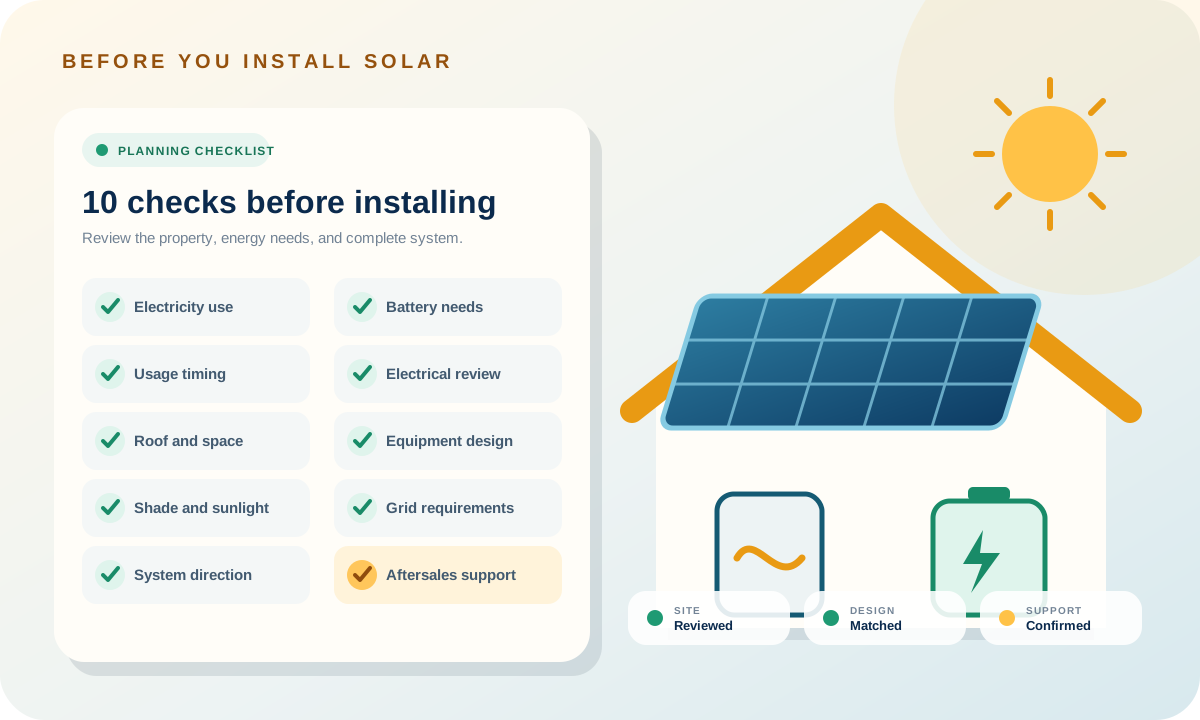
A good solar installation is not simply about getting the most panels possible. Electricity consumption, usage timing, available space, shading, electrical condition, backup requirements, and long-term goals all influence the right setup.
Before requesting a quotation or scheduling an installation, gather the information below. It will make the first conversation more useful and help the provider explain why a grid-tied, hybrid, or off-grid direction may fit the property.
Your quick checklist
10 things to check before installing solar
- Review electricity consumptionCollect recent bills and note average monthly kWh, seasonal changes, and the hours when major loads operate.
- Check the roof and available spaceReview usable area, roof condition, roof type, obstructions, orientation, and possible mounting locations.
- Look for potential shadingConsider trees, nearby buildings, walls, and structures that cast shadows at different times of day.
- Choose the right system directionUnderstand the practical differences between grid-tied, hybrid, and off-grid solar.
- Decide whether battery backup is neededList the essential loads, their combined demand, and the desired backup runtime.
- Assess the electrical systemConfirm how the inverter, wiring, protection, metering, and existing distribution can work together.
- Compare equipment and complete designLook beyond panel count and price to compatibility, ratings, protection, warranties, and expected operation.
- Understand the quotation and installation processAsk what happens from initial review and site assessment through installation, testing, and commissioning.
- Confirm grid and Net Metering requirementsAsk what applies to the serving utility, chosen system configuration, documents, inspection, and approval.
- Check maintenance and aftersales supportKnow how monitoring, inspections, cleaning, service requests, recommendations, and warranties are handled.
1. Review Your Electricity Consumption
Start with recent electricity bills. Look at monthly consumption in kilowatt-hours, not only the peso amount. The peso bill can change with electricity rates, while kWh helps show how much energy the property used.
Several bills are more useful than one because homes and businesses may have seasonal changes. Also identify when the largest loads operate. A property with strong daytime demand may use more solar generation directly, while a property with mostly nighttime demand has a different energy profile.
Use multiple recent bills to understand the normal consumption range.
Note whether major loads operate during daylight, after sunset, or continuously.
Include planned air conditioners, machinery, pumps, appliances, or EV charging.
This consumption-led starting point helps guide the initial system direction, but it does not replace a physical assessment. Read the solar sizing and cost guide for the main capacity factors.
2. Check Your Roof and Available Space
The total roof area is not automatically usable solar area. Roof condition, roof type, ridges, valleys, access paths, equipment, water tanks, obstructions, mounting zones, and cable routes can reduce the space available for panels.
Solar equipment is expected to remain in service for many years. Known roof damage or an approaching roof replacement should be discussed before installation. A proper solar site assessment helps determine what can be installed safely and practically.
3. Look for Potential Shading
Trees, nearby buildings, walls, poles, and other structures can shade different parts of the roof as the sun moves. An area that looks sunny in the morning may become shaded later.
Shading can reduce the energy reaching the panels and influence string layout, equipment choice, and panel placement. Photographing the roof from several angles can help with an initial discussion, but the final design should consider the actual site.
Usable solar space depends on geometry, access, obstructions, structural and mounting conditions, and changing shade - not only the visible size of the roof.
4. Determine Which Solar System Fits Your Needs
The basic options serve different goals:
Daytime savings with utility support
Solar works with the utility and can offset grid consumption while the system is producing. A standard grid-tied system is not automatically backup power.
Solar with battery storage
The system can combine solar, battery storage, and the grid for later energy use or selected-load backup, depending on the design.
Independent energy system
The solar array, inverter, battery, and operating plan must meet demand without depending on normal utility supply.
The right option depends on electricity use, property conditions, budget, utility arrangement, and energy goals. The solar energy flow guide explains how power moves through each type.
5. Decide If You Need Battery Backup
If power interruptions are a concern, identify the appliances and equipment that must remain available. These may include lights, refrigeration, internet equipment, security systems, pumps, medical equipment, or selected business loads.
Battery capacity should not be chosen only by buying the largest option. The design needs to account for usable capacity, inverter power, load demand, startup surges, expected runtime, battery settings, and charging strategy.
Use the battery storage and backup guide to prepare an essential-load list before requesting a quotation.
6. Understand Your Electrical System
Solar panels are only one part of the installation. The panels, inverter, wiring, isolators, protection devices, mounting system, metering, batteries when included, and the property's existing electrical system need to work together.
An electrical assessment helps identify connection points, cable routes, available space for equipment, protection requirements, and conditions that may affect the final design. Solar electrical work should be planned and carried out by qualified professionals.
7. Compare Equipment and the Complete System Design
Do not compare quotations only by panel quantity or total price. Two proposals can differ in system capacity, panel wattage, inverter configuration, battery usable capacity, warranties, mounting, protection, monitoring, documentation, installation methods, and aftersales support.
Ask the provider to explain:
- Panel brand, model, wattage, and quantity
- Inverter brand, model, capacity, and operating mode
- Battery brand, chemistry, nominal and usable capacity
- Protection, wiring, isolators, and monitoring
- Mounting method and roof treatment
- Expected production assumptions
- Product and workmanship warranties
- Items included and excluded from the quotation
Bright Horizon Solar works with established technology partners, but the final selection still depends on engineering compatibility, availability, and the signed project requirements. The goal is to compare the complete system, not isolated components.
8. Understand the Installation and Quotation Process
A professional process normally starts by reviewing electricity use, property information, energy goals, and backup needs. A technical assessment then confirms the roof or mounting area, shading, electrical condition, cable routes, equipment locations, and practical installation constraints.
- Initial informationShare bills, location, property type, usage pattern, goals, and backup priorities.
- Technical assessmentConfirm the actual site, usable space, electrical condition, and installation requirements.
- System design and quotationReview the proposed equipment, capacity, scope, assumptions, exclusions, schedule, and payment terms.
- InstallationComplete the work according to the approved design and applicable technical requirements.
- Testing and commissioningVerify operation, monitoring, protection, system settings, customer orientation, and project records.
9. Check Grid Connection and Net Metering Requirements
For a grid-connected system, ask which utility process applies. Requirements can vary by serving utility, system capacity, and configuration. There may be technical documents, inspections, metering, testing, registration, and approvals to complete.
Do not assume that every installation automatically qualifies for the same arrangement. In Meralco's current published guidance, eligible Net Metering systems can have a renewable-energy capacity of up to 100 kW, while customers who do not intend to export may consider the applicable Zero Export process. Confirm current details with the serving utility.
See Net Metering versus Zero Export in the Philippines for a practical comparison.
10. Consider Maintenance and Aftersales Support
Solar systems are designed for long-term use, but monitoring and maintenance still matter. Ask how the provider handles inspections, cleaning, fault reports, warranty coordination, recommendations, and service history.
A clear aftersales process can make it easier to identify changes in production, address equipment alerts, and keep a record of the work completed. Bright Horizon Solar provides documented solar maintenance and aftersales support for qualified systems in its service area.
Set Realistic Expectations About Savings
Savings vary from one property to another. Consumption, solar capacity, sunlight, weather, shading, system losses, electricity rates, export credits, and how much solar energy is used directly can all affect the result.
A useful estimate should show its assumptions and remain subject to the technical assessment. Avoid promises that every property will achieve the same percentage reduction or a guaranteed zero bill. The article on zero electricity bill potential with solar explains these limits in detail.
Choose a Provider That Designs Around Your Property
Solar is not one-size-fits-all. Bright Horizon Solar focuses on engineering-led systems for residential and commercial properties, including grid-tied, hybrid, and off-grid designs. The objective is to build around actual consumption, usable space, electrical conditions, backup requirements, and long-term goals.
Start with recent electricity bills and basic property details. Then let the technical assessment confirm what is practical before the final recommendation and official quotation are prepared.
Frequently Asked Questions Before Installing Solar
What should I check before installing solar panels?
Review recent electricity bills, usage timing, usable roof or mounting space, shading, roof condition, electrical condition, system type, backup priorities, equipment, utility requirements, and aftersales support.
How many electricity bills should I prepare for a solar quotation?
Several recent bills are more useful than one because they show the normal range and seasonal changes in electricity consumption. The provider may request a specific period.
Do I need a site assessment before installing solar?
Yes. Bills can guide a starting capacity, but a site assessment checks usable space, shading, roof or mounting conditions, cable routes, electrical integration, and backup requirements before the final design.
Should I choose solar based only on price or panel count?
No. Compare the complete design, equipment compatibility, protection, installation method, warranties, expected performance, documentation, and aftersales support.
Does every solar system need a battery?
No. A grid-tied system can offset daytime consumption without a battery. Battery storage is considered when later energy use or backup for selected loads is an important goal.
Can a solar provider guarantee my exact savings?
Exact savings should not be guaranteed because results depend on electricity use, weather, shading, system performance, electricity rates, utility arrangements, and how much solar energy the property uses directly.