
Philippines solar savings guide
Understanding the Potential for a ₱0 Electricity Bill with Solar in the Philippines
Solar can substantially reduce the electricity you buy from the grid. Reaching a very low or zero amount due may be possible for some properties, but it depends on real consumption, solar production, system design, and the applicable utility arrangement.
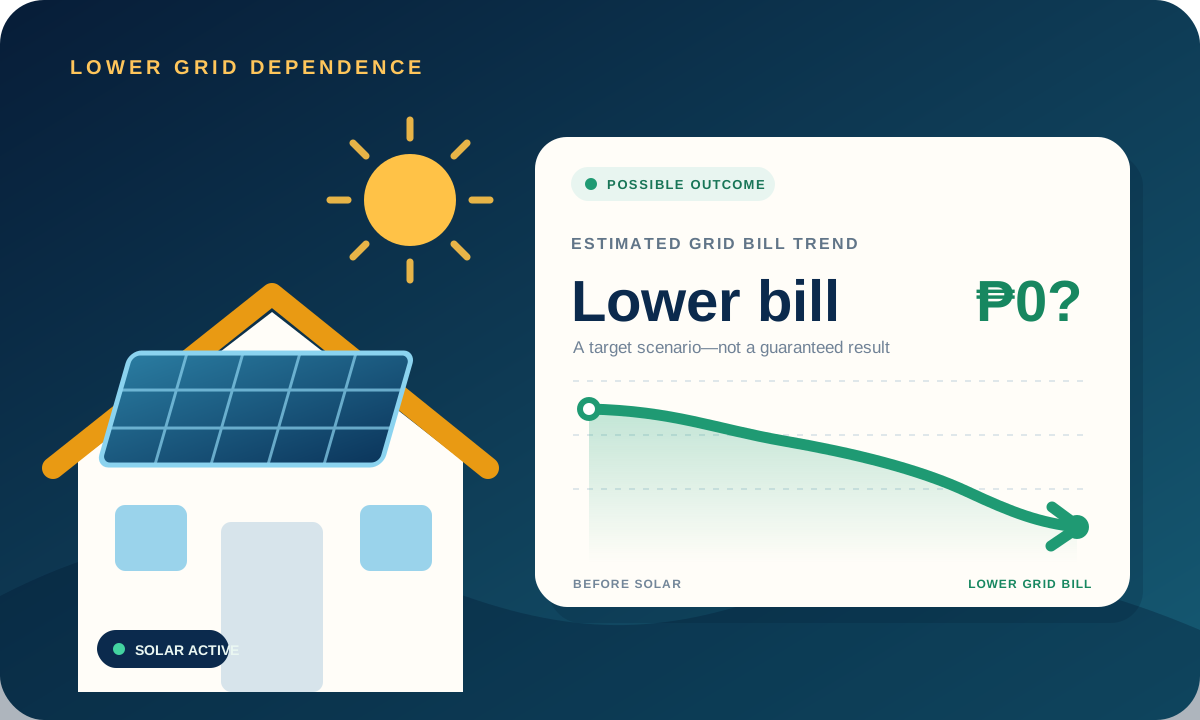
Electricity is one of the expenses that returns every month. For a Filipino household or business looking at solar, a natural question is: can the electricity bill really go down to ₱0?
It can be possible under the right conditions, but it is not a result that any responsible installer should promise for every property. The outcome belongs to the property's actual electricity use, the hours when that electricity is used, the system's production, the available installation area, and the serving utility's rules.
The more useful goal is to design a system that reduces purchased electricity in a way that makes technical and financial sense. That process starts with the electricity bill and a site-specific solar assessment, not a generic package.
The short answer
A zero or very low electricity bill is possible for some properties - not guaranteed for all.
- Solar used directly by the property can reduce electricity purchased from the grid.
- Daytime usage generally improves the opportunity to use solar as it is generated.
- Eligible Net Metering exports may create bill credits under the approved arrangement.
- Nighttime demand, weather, shading, and system limits can increase grid purchases.
- Applicable billing components may remain even when grid energy use is low.
How Solar Can Reduce Your Electricity Bill
Solar panels convert sunlight into direct current electricity. The inverter converts that electricity into alternating current that can be used by the home or business. When solar production and property demand happen at the same time, the solar electricity can serve the property's loads before additional electricity is purchased from the grid.
Timing matters. A business that runs air conditioning, refrigeration, lights, computers, or machinery during the day may use more solar energy directly. A household that uses most of its electricity at night has a different profile and may need a different design.
The goal is not the largest possible array. The goal is the right solar system for the way the property uses electricity.
Three Properties, Three Different Solar Stories
No single solar configuration works the same way for every customer. Consider three common usage patterns.
Loads run while the sun is available
Air conditioning, refrigeration, pumps, and appliances may consume more of the solar production directly during daylight hours.
Demand follows business hours
Lighting, cooling, computers, refrigeration, or machinery can create strong daytime demand that solar may help offset.
Most electricity is used after sunset
The design may rely more on grid electricity at night or consider battery storage for selected later-use and backup priorities.
In every case, actual savings still depend on system size, electricity rates, production, shading, equipment, and site conditions. Read how solar energy flows through the panels, inverter, property, battery, and grid for a component-by-component explanation.
What Happens to Solar Energy You Do Not Use?
At some times of day, solar production may be higher than the property's current demand. What happens next depends on the approved system configuration.
For customers who qualify for Net Metering, eligible excess renewable energy may be exported to the distribution grid and converted into bill credits. In Meralco's current published guidance, eligible renewable-energy systems can have a capacity of up to 100 kW, or 100 kWp for solar PV, subject to the program's requirements.
Meralco states that Net Metering credits are based on actual exported electricity multiplied by the monthly blended generation charge, excluding other generation adjustments. That is different from the full retail rate paid for imported electricity, which also includes other charges.
This is one reason proper solar system sizing matters. Producing more electricity is not automatically better if the property cannot use it effectively and the export arrangement values it differently.
Net Metering or Zero Export?
Both are grid-connected approaches, but they manage excess solar electricity differently.
| Planning point | Net Metering | Zero Export |
|---|---|---|
| On-site use | Solar can serve property loads first | Solar can serve property loads first |
| Excess electricity | Eligible excess may be exported under the approved arrangement | Export is intentionally prevented or limited |
| Credit | Eligible exports may receive utility bill credits | No export credit because the system is configured not to export |
| Utility process | Eligibility, metering, testing, and approval apply | Current notification, registration, and technical rules may apply |
| Battery | Not automatically required | Not automatically required |
The Department of Energy's 2026 policy for Self-Generating Facility Zero-Export Solar Systems and Micro-Solar Systems addresses own-use solar that does not export excess electricity to the distribution grid. Customers should still confirm current requirements with the serving utility. The detailed Net Metering versus Zero Export guide explains the difference.
Do You Need a Solar Battery?
Not necessarily. A grid-tied solar system can work alongside the utility supply and offset daytime consumption without a battery. A hybrid system adds battery storage so available energy can be stored for later use or selected loads can remain powered during an outage, depending on the design.
Battery storage should be planned around essential loads, usable battery capacity, inverter limits, required runtime, and system compatibility. For a home, priority loads might include lights, refrigeration, internet equipment, security systems, or pumps. A business may prioritize communications, point-of-sale equipment, refrigeration, or other critical operations.
Runtime depends on the battery's usable energy and the combined demand of the connected loads. Identify the loads that matter before choosing capacity.
Use the solar battery and backup planning guide to prepare those priorities.
The Biggest Solar Mistake: Choosing a System by Guessing
A system that is too small may not create the intended impact. A system that is unnecessarily large may increase the initial investment without proportional value if the property cannot use or appropriately export the additional generation.
A good design considers the whole property:
Recent bills show energy use; operating habits show when the demand occurs.
Usable space, orientation, shading, mounting conditions, and access affect the practical array.
Existing distribution, protection, cable routes, and equipment integration affect the installation plan.
Essential loads and required runtime guide inverter and battery decisions.
Net Metering, Zero Export, or another approved setup affects excess energy handling.
Planned air conditioners, machinery, appliances, or EV charging may change the load profile.
Solar production can change with weather, shading, orientation, equipment performance, and other site conditions. Consumption can also change when a family or business adds new loads. That is why an estimate should be treated as a starting point and the final recommendation should follow a technical assessment.
Home or Business? The Answer Can Be Different
A home and a business can have very different electricity patterns. A household may have stronger morning and evening demand. A business may have substantial daytime loads because of cooling, refrigeration, lighting, computers, pumps, or machinery.
For a business, the design may focus on matching production to operating hours. For a home, the design may need to balance daytime use, nighttime demand, and backup priorities. Bright Horizon Solar offers residential and commercial grid-tied, hybrid, and off-grid solutions based on the property's actual requirements.
Before Going Solar, Start with Your Electricity Bill
You do not need to guess where to begin. Prepare recent electricity bills and basic property information, then review:
- Monthly electricity useCheck normal kWh consumption and how it changes across several months.
- Usage timingIdentify whether major loads operate during the day, at night, or throughout the full day.
- Major equipmentList air conditioners, refrigeration, pumps, computers, machinery, and other significant loads.
- Installation spaceNote roof areas, ground space, shading, obstructions, and any known roof concerns.
- Backup prioritiesIdentify the loads that must remain available during a power interruption and the target runtime.
- Future plansInclude expected new appliances, equipment, business expansion, or electric-vehicle charging.
Bright Horizon Solar uses this information to establish a starting direction before a technical assessment confirms the final design. You can also use the Solar System Builder for an initial, non-binding estimate.
So, Is a ₱0 Electricity Bill Possible?
Yes, it can be possible under the right conditions. A combination of direct solar use and applicable utility credits may reduce the amount due substantially and, in some cases, potentially to zero.
But the result is not guaranteed. It depends on electricity consumption, usage timing, solar production, system design, utility arrangements, applicable billing components, and other property-specific factors. The better question is: what solar system properly matches this property's electricity needs?
If you are tired of rising electricity costs, send Bright Horizon Solar your latest electricity bill and property details. The team can help you explore a system designed around your home or business rather than a one-size-fits-all promise.
Frequently Asked Questions About Zero Electricity Bills and Solar
Can solar panels reduce my electricity bill to ₱0?
It can be possible under the right conditions, but it is not guaranteed. The result depends on electricity consumption, usage timing, solar production, system design, utility arrangements, and billing components.
Why might I still receive an electricity bill after installing solar?
The property may still import electricity when solar production is insufficient, especially at night or during poor weather, and applicable utility charges may remain.
Does Net Metering make a zero bill automatic?
No. Eligible exports may receive bill credits under the approved utility arrangement, but exported energy may not have the same value as electricity used directly on-site.
Do I need a battery to lower my electricity bill?
Not necessarily. Grid-tied solar can offset daytime grid consumption without a battery. A battery may be considered for later use or selected backup loads.
Which solar system is best for a very low electricity bill?
The suitable system depends on the property's actual consumption, daytime and nighttime use, available space, electrical condition, backup priorities, and serving utility requirements.
What should I prepare before requesting a solar assessment?
Prepare recent electricity bills, information about major appliances or business equipment, normal operating hours, available roof or mounting space, and the loads that need backup.