
Philippines solar connection guide
Net Metering vs. Zero Export Solar in the Philippines: What's the Difference?
Both setups use solar electricity on-site. The key difference is what happens to excess solar power: Net Metering may export eligible excess energy for utility credits, while Zero Export prevents intentional export to the grid.
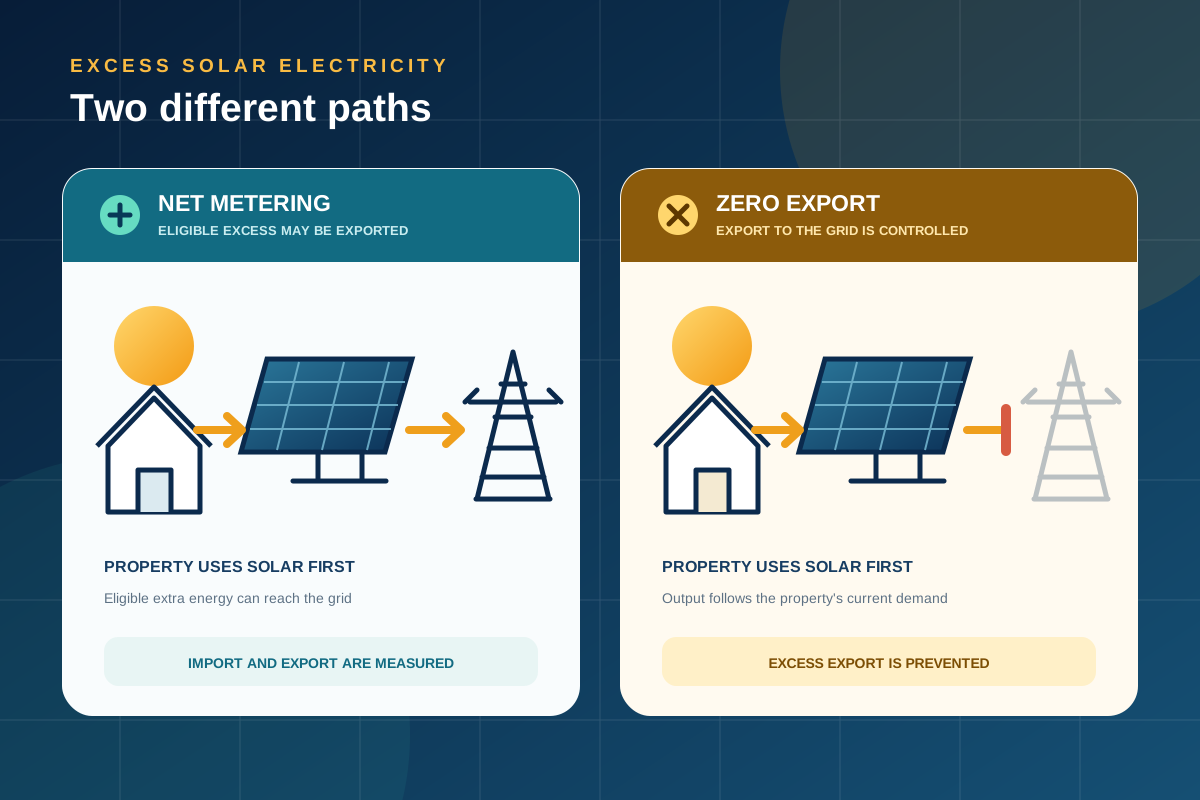
As more homes and businesses use solar energy, one practical question comes first: what happens when the solar panels produce more electricity than the property is using?
Net Metering and Zero Export are two different ways to manage that excess solar electricity. Net Metering can allow eligible excess electricity to flow to the distribution grid and be handled under the approved utility arrangement. Zero Export is configured to prevent excess electricity from being intentionally sent to the grid.
Understanding this difference can help Philippine homeowners and business owners discuss the right grid-connected solar design with their installer and serving distribution utility.
The short answer
The difference is what the system does with extra solar electricity.
- Net Metering: eligible excess electricity may be exported and credited under the applicable utility arrangement.
- Zero Export: the inverter or export-control system limits solar output so excess electricity is not intentionally exported.
- Both: solar generation is used by the property first.
- Neither: automatically determines whether a battery is required.
What Is Net Metering?
Net Metering allows an eligible solar system to supply electricity to the property while allowing eligible excess electricity to be exported to the grid, subject to applicable rules, requirements, and the arrangement with the electric utility.
For example, the solar panels may produce more electricity during the day than a home or business is using at that time. In a net-metering setup, eligible excess electricity can be exported to the grid and accounted for under the applicable arrangement.
In Meralco's service area, current customer guidance describes Net Metering as a program under Republic Act No. 9513 for eligible renewable-energy systems up to 100 kW. It uses a bi-directional meter to measure electricity imported from and exported to the grid. Eligibility, documents, fees, inspections, and processing can vary by project and utility, so customers should confirm the current requirements before proceeding.
Bright Horizon Solar can provide net-metering documentation assistance for qualified projects where applicable.
What Is Zero Export?
Zero Export is a solar system setup designed to prevent excess electricity from being exported to the grid. The system monitors the property's electricity demand and manages solar output so that it does not intentionally send excess power to the grid.
For example, if a property is using 4 kW while the solar system could produce 6 kW, a properly configured zero-export system can control the solar output so the additional electricity is not exported.
Zero Export does not automatically mean off-grid. The property may remain connected to the utility and import electricity whenever the solar system is not supplying the full load. The serving utility may still require notification, registration, inspection, protection, or other interconnection steps.
Net Metering vs. Zero Export
The main difference is what happens to excess solar electricity. The table below gives a practical comparison, but the final arrangement remains subject to the system design and the current requirements of the serving distribution utility.
| Comparison point | Net Metering | Zero Export |
|---|---|---|
| Solar used by property | Yes, on-site consumption is supplied first | Yes, on-site consumption is supplied first |
| Excess solar electricity | Eligible excess may be exported to the grid | Export is intentionally prevented or limited |
| Utility accounting | Eligible export is recorded under the approved arrangement | No export credit because electricity is not intentionally exported |
| System control | Import and export are measured through the applicable metering setup | Solar output follows the property's current demand through export control |
| Battery required | No, not automatically | No, not automatically |
| Utility process | Requires Net-Metering eligibility and approval | May require Zero Export registration and technical approval |
Neither setup is automatically the right choice for every property. The suitable option depends on electricity use, daytime demand, site conditions, system design, serving utility, and the customer's energy goals.
How Does Net Metering Work?
- Solar panels generate electricity.During the day, solar panels generate electricity from sunlight.
- The property uses solar power.Appliances, lighting, air-conditioning, equipment, and other electrical loads use the available solar electricity.
- Eligible extra electricity may be exported.If production is higher than current demand, eligible excess may flow to the grid under the approved arrangement.
- Electricity flow is measured.The applicable metering arrangement records electricity moving between the property and the grid.
- Applicable credits are accounted for.Eligible exported electricity is handled according to the utility's current Net-Metering rules.
How Does Zero Export Work?
Zero Export focuses on using solar electricity within the property while preventing excess electricity from being exported. The system monitors current demand and manages solar production based on that consumption.
Simple example
- Property consumption
- 4 kW
- Available solar production
- 6 kW
- Export-control response
- Limit output so excess is not exported
This type of setup may be considered when the goal is to use solar electricity on-site without exporting excess power to the grid.
Which Setup Is Right for Your Property?
The appropriate solar setup depends on the specific needs and conditions of the property. Important factors include electricity consumption, daytime usage, available roof or installation area, shading, the existing electrical system, backup requirements, energy goals, and current utility rules.
This is why solar site assessment and consumption-led system sizing matter before installation. A home with strong daytime usage may use solar differently from a business with long operating hours or a property that prioritizes brownout backup.
For a starting comparison, Bright Horizon Solar serves qualified residential and commercial properties across NCR, Bulacan, Rizal, Cavite, Laguna, and the wider CALABARZON service area.
Why Solar System Sizing Matters
Choosing a solar system should not be based only on the number of panels. A good starting point is understanding how much electricity the property uses, when it uses that electricity, and what the customer wants the solar system to do.
Consumption and usage timing help determine a starting system size. Roof space, shading, electrical conditions, export limits, and backup requirements also affect the final design. An oversized system can produce more midday electricity than the property can use, while an undersized system may not meet the intended energy goal.
Net Metering, Zero Export, and Battery Storage
Net Metering and Zero Export are different from battery storage. A hybrid solar system can include batteries that store solar energy for later use or backup power.
Having a battery is not automatically required for either Net Metering or Zero Export. Battery storage is a separate part of the overall design and should be planned around the loads that need backup, their power demand, and the intended operating time. Learn more in the solar battery storage and backup guide.
How Bright Horizon Solar Can Help
Bright Horizon Solar designs systems around the property's electricity needs rather than applying the same package to every customer. The planning process can consider electricity consumption, usage patterns, roof and mounting conditions, shading, existing electrical conditions, backup requirements, serving utility, and energy goals.
The company offers grid-tied, hybrid, and off-grid solar systems for qualified residential and commercial properties. For properties considering grid-tied solar, Bright Horizon Solar can also assist with the Net-Metering process where applicable.
Bright Horizon Solar - Engineered Solar. Built for Every Horizon.
Frequently Asked Questions About Net Metering and Zero Export
Is Net Metering the same as Zero Export?
No. Net Metering allows eligible excess electricity to be exported to the grid under the applicable arrangement, while Zero Export is designed to prevent excess electricity from being exported.
Can I use solar without Net Metering?
Yes. A solar system can be designed for on-site electricity use without exporting excess power, depending on the system design and the requirements of the serving distribution utility.
Do I need batteries for Zero Export?
Not necessarily. Zero Export controls electricity export, while battery storage saves energy for later use or backup. They are separate design decisions.
Can a hybrid solar system have batteries?
Yes. A hybrid system can combine solar panels, an inverter, and battery storage. Battery capacity should be based on the loads that need backup and how long they need to operate.
Does Zero Export mean the property is off-grid?
No. A Zero Export system may remain connected to the utility grid and import electricity when needed; it is configured not to intentionally export excess solar electricity.
Will solar completely eliminate my electricity bill?
Not necessarily. The remaining bill depends on electricity consumption, solar production, system size, usage timing, applicable utility charges, and the approved arrangement.